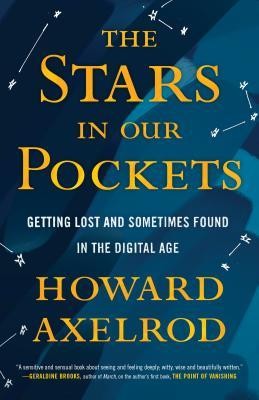
The Stars in Our Pockets
History & SocietyMind, Psychology & ScienceSelected Passages
Selected passages
Under the guise of efficiency or even fun, often all we’re left with are the trappings of efficiency and fun, a kind of perpetual fracturing of the moment, a strange standardized speed.
Life at many speeds. With clock time, event time, and even digital time now and then. Life at the right speed, in the right temporality, for whatever you’re doing. David Foster Wallace, doing an interview for a New York Times profile, once said to Roger Federer that watching tennis on TV doesn’t do justice to the speed of the game. Federer had a strange response: “For the first time since I have come here to Wimbledon, I went to see a match on Centre Court, and I was also surprised, actually, how fast, you know, the serve is and how fast you have to react to be able to get the ball back. . . . But then once you’re on the court yourself, it’s totally different, you know, because all you see is the ball, really, and you don’t see the speed.”
The truest critics are not critics but innovators.
Why couldn’t facts and reason lead to more respect for mystery and humility? And why couldn’t mystery and humility lead to the search for more facts and clearer reason?
But YouTube plays on our natural curiosity—to uncover more and more hidden answers, more and more dangerous descents—and dulls our curiosity itself, constantly asking the next question for us, and usually fairly dumb thrill-seeking questions at that.
The shared vastness of the night sky has been pulled inside out not just into television sets but sifted into little flashes of light in everyone’s pocket. We can each be a star, and the hope is to be seen by all the other stars, to be seen everywhere and at different times. That’s the new extra dimension for our pain and wonder, our substitute cosmos, and it requires almost no waiting, almost no vulnerability to be told “you’re not alone” as you sit alone in your room posting that you are lonely.