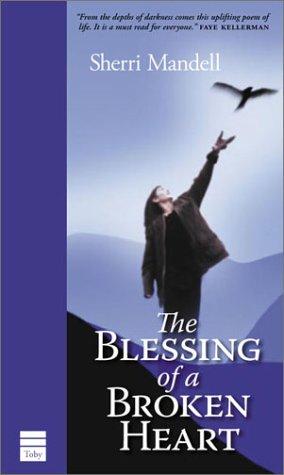
The Blessing of a Broken Heart
Jewish Thought & MussarBiography & MemoirFamily & RelationshipsSelected Passages
Selected passages
many of us live with broken hearts. But when you touch broken hearts together, a new heart emerges, one that is more open and compassionate, able to touch others, a heart that seeks God. That is the blessing of a broken heart.
My view has been irreparably changed, damaged. Yet I like to think that Koby is still in my view, invisible for the time being. I have a feeling that one day, the veil separating us will disappear, the clouds will part, and there he will be—strong, brave, and handsome. I will instantly recognize him by the sound of his voice, his smell, and the power of his hug.
Suffering has thrust me into a world where there is no okay. Each moment is a miracle and an agony. A miracle that the world exists in all its glory. An agony that this world is one of suffering and pain.
The point of the shiva is not to comfort a mourner for her loss but to stand with her in the time of her grief. As Rabbi Maurice Lamm notes, the main purpose of the shiva is to relieve the mourner of his loneliness. A person expresses compassion for the mourner through his presence and silence.
God’s presence is not something that forces you to recognize it; you have to listen very hard to hear. You have to make room for it in your own silence.
silence respects the mystery of life and the limits of language. It says that there is more to our lives than we can speak about. It admits there is another way of knowing and that knowing is sometimes in the space between words.
Some people tell me to be strong. They want me to reassure them that there is hope in the world. Keep going so that we can see that life is possible after your child is dead. But what they mean by being strong is not what I mean. I believe that being strong means feeling pain, letting my body mourn, letting my mind mourn, letting my soul mourn—entering the pain, not fleeing it. Rabbi Adin Steinsaltz, the eminent Torah scholar, comes to see us and tells us that he also cut school as a kid, that he remembers a bomb exploding in the street when he was a little boy in Israel. He tells us there is no place in the soul for the loss of a child. “At first there will be people around you but eventually, they all go away. And then you are all alone and it’s you and your pain.” He does not distract us from the stark truth of our suffering—the pain will remain and it’s up to us to find a way to live with it.
The period for mourning a parent is a year. For a year, the child cannot attend weddings or Bar Mitzvah s, listen to live music, or buy new clothes. The mourner is supposed to refrain from anything too celebratory, so as not to detract from the respect and honor due to a parent after death. I was surprised when I found out that the halachic, traditional Jewish period for mourning a child is only thirty days. But one of the mothers explained why: it’s because you grieve the rest of your life. You don’t need the rituals to remind you to grieve. You will think of your child forever. Any new piece of clothing you buy will remind you that you can no longer take him shopping; you will not want to go to a party and dance; you will not want to sing and listen to music; you will want to stay home and grieve and honor his memory. But Jewish law encourages you to live, to go on.
In the book Made in Heaven, Aryeh Kaplan teaches us that a human being can be likened to glass—vulnerable. But glass, when it is broken, can be re-melted and re-blown. It can be made whole again. So, too, even after a person dies, his life is not over. He too can be restored, made whole. And so, too, can our hearts.
But God is more creative than we are. What we worry about is rarely what we should worry about. God is too original for that.
Maybe this is how peace will come, I thought. Slowly. People learning to listen. One bird at a time. I was so innocent, so naïve. Even then, I had a feeling the bird story was only a story, a fairy tale. And now I know I was right. Because listening to each other isn’t enough to create peace. There has to be a common language. A language where cruelty is not condoned, terrorism is not honored, and human life is respected.
When the Maccabees were victorious and reclaimed the temple, there was just a little oil left to light the menorah, enough for one day. They kindled the flame and the oil lasted for eight days. Many people believe that this is the miracle of Chanukah. But maybe it wasn’t a miracle at all. Perhaps one vial of oil can always be enough for eight nights if we look at our lives as a place for God to dwell. Because God is infinite, when we approach divinity, we leave the world where numbers circumscribe reality. Once we make a sanctuary for God, then the infinite possibilities of God dwell within us as well. Numbers become guides, instead of rulers. Chanukah teaches us that what we see in this world is a glimmer of the truth. Our measurements in this world are imprecise, our ways of knowing limited. The world of truth is not one where the numbers we ascribe to reality are sufficient. One vial of oil becomes eight.
God’s silence does not mean that He is indifferent. God’s silence is a voice, like the voice in the wadi, a still hushed voice, a voice that in giving us free choice grants us our own voice—our own way of responding to the world, our own way of coping with the mystery and pain of living.
Nissan, the month of our redemption, can be a month of budding new life. But before that growth can occur we need to clean out. It’s surprising that the preparation for a holiday about freedom centers around cleaning. But as I clean, I understand that cleaning is about going behind and under, going into what is usually hidden and dark to expose the underbelly of our surroundings. It’s about appreciating and elevating the mundane. We see what we don’t usually see. It is the first step toward change—a deep consciousness of what is, the situation in which we find ourselves